Stepping into a derelict wreck on a frozen orbit is rough, and most first-day captains lose their first crew before lunch. This Ostranauts complete guide breaks down exactly what the game throws at you after the K-Leg cutscene, so you stop burning credits on bad mods and start earning them on salvage contracts.
Getting Started in the Ostranauts Complete Guide
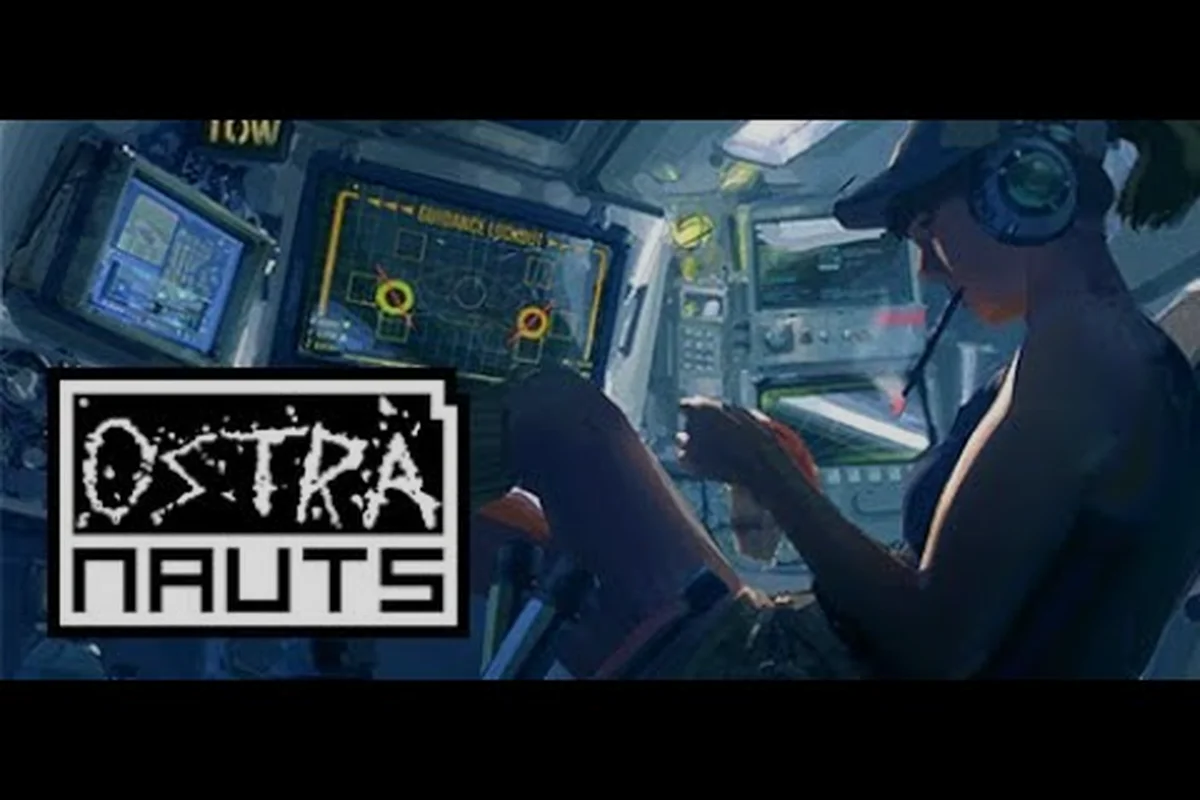
Ostranauts is a hardcore noir space-sim RPG set in the same universe as NEO Scavenger, developed by Blue Bottle Games and published by Kitfox Games since 2024. It launched into Early Access on September 10, 2020 and reached Version 1.0 on August 3, 2026 (current build v1.0.0.7). The price sits at US$19.99 with a recurring 20% promotion that drops it to US$15.99, and the game is Steam Deck verified according to community testing reports.
You start in the K-Leg scrapyard with a beat-up loaner ship, a crushing debt, and a personality that's mostly yours to shape. The Ostranauts complete guide exists because the game refuses to hold your hand: there is no quest log that points you at the next objective, no map marker that tells you which derelict is profitable, and no minimap that warns you about an engine flame-out two corridors away. Every system feeds into every other system, which is exactly why a structured Ostranauts walkthrough pays off within the first ten in-game days.
The core loop in this Ostranauts tutorial is brutally simple to describe and brutally hard to execute:
- Salvage derelicts around the system to strip parts and cargo.
- Trade goods between stations for margin.
- Hire crew, keep them fed, oxygenated, sane, and loyal.
- Pay down the K-Leg loan before the bank sends a debt collector.
Everything else, including the Newtonian flight model and grid-based ship construction, exists to make those four verbs feel dangerous. If you want a faster on-ramp, the Ostranauts beginner guide condenses the first five hours into a checklist. For the broad-strokes layout of mechanics, the gameplay guide covers systems in isolation.
Character Creation and the K-Leg Starting Loan
Character creation is fast but consequential, because the stats you pick influence every skill check from atmospheric entry to crew negotiation. The Ostranauts complete guide recommends treating your captain as a generalist first and a specialist second, since you can recruit specialists later but cannot un-burn your starting attribute points.
Stats That Matter at v1.0
| Attribute | Early-Game Value | Long-Term Value |
|---|---|---|
| Pilot | Medium (decent thrust control) | High (boarding under fire) |
| Engineer | Medium (basic repairs) | High (mid-combat rewiring) |
| Medic | Low (bandages only) | Critical (crew death spiral) |
| Negotiator | High (loan terms) | Medium (rep grinds) |
| Scavenger | High (salvage yield) | High (rare module finds) |
Push Pilot and Scavenger if you want to solo the early game, because the K-Leg loan demands immediate cash flow. Pour points into Medic if you plan to hire crew in week one, because a single untreated infection can wipe a 40,000-credit hire. The official Getting Started page on the community wiki confirms that starting attributes can be patched at a clinic later, but only at steep rates, so treat the starting allocation as semi-permanent.
The starting loan itself is the throughline of the entire Ostranauts tutorial experience. You owe the bank roughly 250,000 credits, interest accrues weekly, and missing a payment triggers a bounty hunter encounter on your next station dock. That bounty hunter does not negotiate, and most early captains lose their first ship trying to talk their way out of a debt collection. The Ostranauts complete guide treats the loan as a soft tutorial timer: you are not racing the clock, but you are racing the interest rate.
Ship Building and Modular Grid Systems
Ships in Ostranauts are built on a 3D grid where every wall, floor, and airlock is a physical object with collision. That sounds abstract until you try to dock and your badly placed thruster clips the station, venting your atmosphere into hard vacuum. The Ostranauts walkthrough treats ship design as a three-layer problem: hull layout, internal routing, and power distribution.
Core Module Categories
| Module Type | Examples | Primary Use |
|---|---|---|
| Hull | Light Plate, Heavy Plate, Ablative Tile | Defines silhouette and armor |
| Propulsion | RCS Thruster, Main Drive, Maneuvering Jet | Controls the Newtonian flight model |
| Life Support | O2 Generator, CO2 Scrubber, Heater | Keeps the crew breathing and warm |
| Crew | Bunk, Galley, Bathroom, Rec Room | Addresses physiological and morale needs |
| Cargo | Crate Rack, Fuel Tank, Air Lock | Stores goods and lets you board wrecks |
| Utility | Salvage Cutter, Fabricator, Workshop | Repairs and crafts modules |
The grid system rewards planning, but it also punishes redesigns because deconstructing modules refunds only 50% of their build cost. New captains in this Ostranauts tutorial frequently strip and rebuild three times in the first hour of station dock, which is how they end up broke at the loan office. If you want a deeper dive into specific module stats, the ship building wiki page catalogs every stock part with mass, power draw, and crew requirements.
Power and Life Support Basics
Power flows along cables you physically lay between generators and consumers. Cut the cable during a fight and your O2 generator goes dark, which means your crew asphyxiates in roughly four minutes. The Ostranauts complete guide recommends starting with one Fusion Cell powering your O2 Generator, Heater, and Bridge, then expanding only when you can afford a backup generator with a redundant line. Redundancy is the difference between a salvage run and a coffinship drifting through the outer system.
Crew Management: Body and Mind
Crew in Ostranauts are not stat blocks. They breathe, eat, sleep, urinate, get sick, get bored, get scared, and form opinions about you and each other. Ignore their needs and they die, mutiny, or worse, keep working while their morale silently tanks until they snap at a critical moment. The Ostranauts walkthrough treats crew management as the game's hardest layer because every other system quietly feeds it.
Needs vs. Morale
| System | Frequency | Consequence of Neglect |
|---|---|---|
| Oxygen | Constant | Asphyxiation in ~4 minutes |
| Temperature | Constant | Hypothermia in cold zones |
| Hunger | Daily | Starvation damage after ~3 days |
| Rest | Daily | Exhaustion debuff stacking |
| Sanitation | Daily | Disease if a bathroom is missing |
| Morale | Continuous | Mutiny trigger at low morale |
Crew needs are physical and easy to fix with modules: a Galley solves hunger, a Bathroom solves sanitation, a Bunk solves rest. Morale is psychological and harder to fix because it depends on room quality, pay, mission outcome, and whether the captain orders the crew into obviously suicidal salvage runs. The Ostranauts complete guide recommends keeping morale above 60% on every hire, because the moment a crew member drops below 30% they start making autonomous decisions, which usually means abandoning their post during a hull breach.
Building a Reliable Roster
Recruitment happens at station bars, employment kiosks, and the occasional black-market contact. Each candidate lists their stats, salary demand, and a short backstory that hints at hidden traits. The Ostranauts tutorial recommends hiring a Medic and an Engineer first, then a Pilot second, because medical emergencies and engine failures are the two events that kill fresh crews the fastest. Wait on a security officer until you can afford someone with non-trivial combat stats, since a bad gunfight will cost you more in repairs and funerals than any month of security wages.
Pay your crew on time, every time. The wage ledger is a hidden counter, and missing payroll tanks morale across the entire roster. Promising a hazard bonus before a derelict dive, then refusing to pay it after a clean recovery, is the fastest way to lose veteran hires to a rival captain.
Salvage Runs, Trading, and Debt Repayment
The income engine that powers this Ostranauts walkthrough is the salvage-trade-repair loop. You fly to a derelict, dock, board, strip the wreck of valuable modules and cargo, dock at a station, sell the cargo, repair the modules at your workshop, and resell them at a markup. That loop pays down the K-Leg loan faster than any legal trade route, because derelict salvage sells for 2-5x the price of equivalent station-bought goods according to community data.
The First 10 In-Game Days
| Day | Priority | Why |
|---|---|---|
| 1-2 | Tutorial derelicts | Low risk, guaranteed salvage |
| 3-4 | First station trade run | Learn commodity prices |
| 5-6 | Hire a Medic + Engineer | Stop dying to infections |
| 7-8 | Upgrade O2 redundancy | Stop dying to power loss |
| 9-10 | Mid-risk derelict | Real credits, real danger |
Risk scales with reward, which is the entire design philosophy of the Ostranauts complete guide. A close-orbit derelict is safe, profitable, and boring. A deep-system derelict is dangerous, occasionally inhabited, and the only place to find rare-tier modules that can pay off half your loan in one cargo bay. The trick is to scale risk gradually: take three safe wrecks to fund one dangerous wreck, repeat.
Trading follows the same curve. The game ships with a working economy in v1.0.0.7, and commodity prices swing between stations based on local supply and demand. The Ostranauts tutorial recommends learning three commodity pairs first (food, fuel, medicine) before chasing rare imports, because rare imports often require a reputation gate that takes weeks to unlock.
If you want the streamlined survival checklist that complements this broader overview, the starter guide breaks the opening shift into a step-by-step routine. For the deeper mid-game plan, the early game guide walks through the first loan payment in detail.
Mods, Persistence, and Long-Term Survival
Ostranauts supports pure text-based mods because Blue Bottle Games ships nearly every variable in human-readable files. That means a competent player can rebalance the economy, add new derelicts, or overhaul crew AI with a text editor and a wiki reference. The Ostranauts complete guide treats modding as an advanced topic, but the on-ramp is friendly: drop a .json file into the mod folder, restart, and the change is live.
Surviving Beyond the First Loan
Paying off the K-Leg debt unlocks the rest of the game, because the bank releases your ship registration and stops sending bounty hunters. That is when the Ostranauts tutorial ends and the real space-sim begins. You can chase faction reputation across the inner system, take assassination contracts at the black market, or strip your loaner ship down to the hull and rebuild it into a mobile station. The grid system, the crew system, and the Newtonian flight model keep compounding the further you go, which is why most veteran players report 60-100 hour runs even after "finishing" the debt arc.
If you want a hard reference for every system the Ostranauts walkthrough covers, the Ostranauts page on the community wiki is the most authoritative single source, while the Steam store listing tracks version history, patch notes, and current pricing.
Frequently Asked Questions
Is Ostranauts a good game for beginners?
Ostranauts has a steep learning curve and is best approached as a patient systems-driven sim rather than an action game. Players who enjoy reading tooltips, planning ahead, and learning from failed runs tend to thrive, while players who want fast combat loops often bounce off the slow opening shift.
How long is the K-Leg starting loan?
The default K-Leg loan is roughly 250,000 credits with weekly interest that varies by your negotiator score. Most new captains in this Ostranauts tutorial clear it within 10-15 in-game hours of focused salvage work, though risk-averse players often stretch it to 20+ hours.
Can I play Ostranauts without fighting?
Yes, the game supports a pacifist trade-and-salvage route through legitimate contracts and station-to-station hauling. Combat exists as an emergent risk rather than a forced encounter, and most derelicts are unmanned, which makes the Ostranauts complete guide viable without ever firing a shot.
Does Ostranauts support mods on Steam?
Yes, the game ships with full text-data mod support and Steam Workshop integration was added during Early Access. Most mods rebalance the economy, add new ship parts, or expand the crew trait pool, and they coexist with the Ostranauts walkthrough community builds without overwriting core files.
What is the difference between Ostranauts and NEO Scavenger?
Both share the same post-apocalyptic solar system universe, but NEO Scavenger is a turn-based hex-crawl RPG, while Ostranauts is a real-time-with-pause space-sim focused on ship ownership and crew management. The Ostranauts tutorial experience is closer to a hardcore flight sim than a roguelike, which surprises most players coming from the older game.
What part of the Ostranauts walkthrough felt the most opaque to you on your first run, and which system would you want covered deeper in a follow-up? Drop your toughest derelict story in the comments, share this Ostranauts complete guide with the captain who keeps venting his own ship, and bookmark the page before your next shift.