
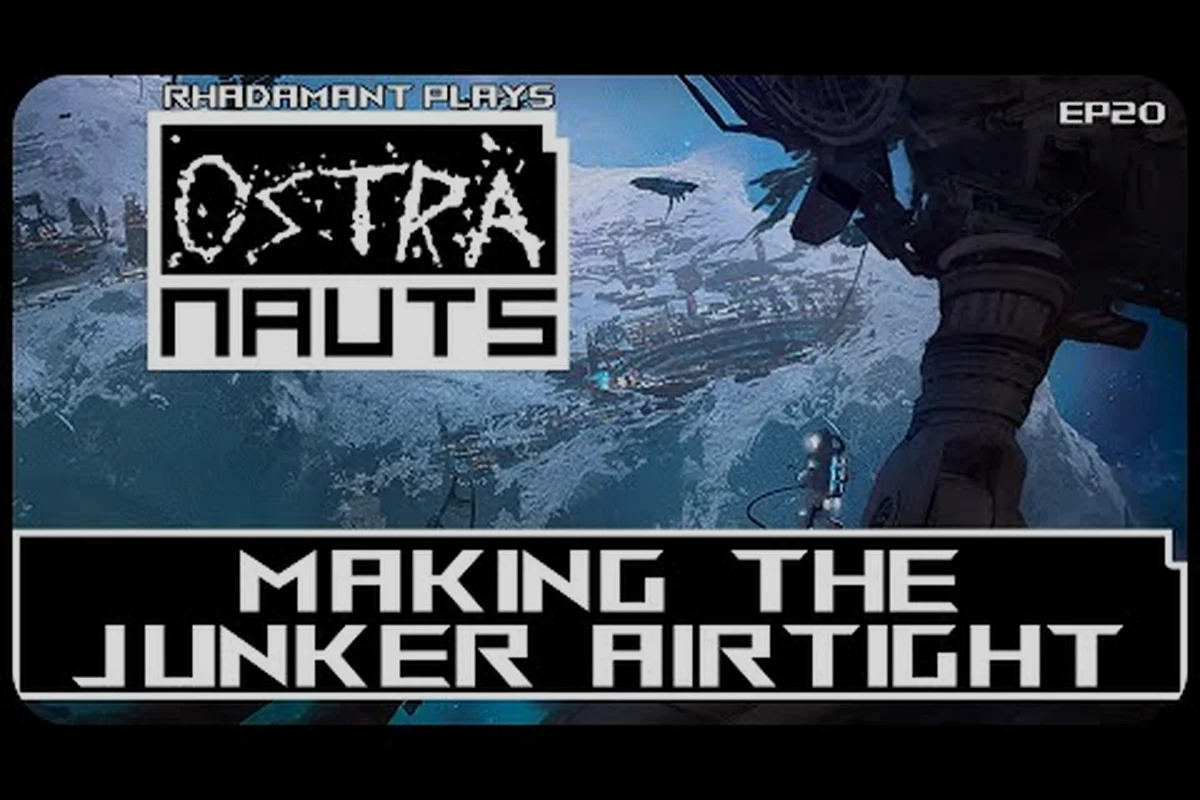
Every run starts the same way: the drone beacon flickers, your transponder chirps an unfamiliar ping, and a NASS patrol cutter slides out of an asteroid shadow with guns already warm. For salvagers operating around K-Leg and the inner stations, encounters with Ostranauts NASS space cops are not a question of if, but when. Understanding how this faction patrols, scans, and escalates is the difference between a profitable haul and a ship-full of confiscated cargo. This guide breaks down their behavior, your legal exposure, and the field-tested tactics that keep your crew alive and your ledger in the black.
Who Are the Ostranauts NASS Space Cops and Why They Hunt You
The NASS — short for Nnamdi Azikiwe Station Security — is the de facto law enforcement arm operating out of K-Leg (OKLG) and the surrounding jurisdiction. Where corporate security handles dock disputes and station-level infractions, NASS space cops are the ones who venture into the belt, board drifting hulks, and chase down transponder-dark vessels. According to community data, they are the only faction with the authority to issue interstellar bounties and trigger system-wide alerts when you cross their threshold of tolerance.
NASS Authority vs. Corporate Security
NASS officers operate under a different rulebook than the corporate fixers you can bribe at a station bar. They cannot be paid off mid-pursuit, and their scanner logs are filed directly to a central registry rather than a local ledger. The practical consequence is that a NASS warning on one station will follow your captain's record across the entire map.
| Authority Type | Jurisdiction | Can Be Bribed | Record Sharing | Patrol Range |
|---|---|---|---|---|
| NASS Space Cops | Inter-station, belt-wide | No | Central registry | Long-range cutters |
| Corporate Security | Station docks, leaseholds | Yes (often) | Local only | Station perimeter |
| Mercenary Crews | Freelance contracts | N/A | None | Contract-defined |
| Pirate Bands | Lawless zones | Sometimes | None | Smuggler lanes |
Why Salvagers Trigger Their Attention
NASS profiling logic weights several variables when deciding which vessel to investigate. A clean transponder broadcasting an honest cargo manifest will usually pass unmolested. A salvager, by contrast, routinely shows up on their radar with one or more red flags: a ship registered to a non-existent company, a heat signature consistent with recent plasma cutting, or a transponder that suddenly drops offline and reappears in a debris field. According to the official Ostranauts wiki, NASS patrol vectors are seeded procedurally around active salvage sites, meaning the longer you linger in a wreck, the more likely a cutter is already en route.
For new captains still learning the ropes, our Ostranauts starter guide covers how to read your own transponder status before you even undock.
How NASS Patrols Detect and Approach Salvagers
NASS detection is layered, and understanding each layer is the only way to systematically reduce your encounter rate. The faction does not rely on a single scan; it builds a threat profile over several seconds of observation.
The Three Detection Layers
Layer 1 — Transponder Polling. Every vessel is expected to broadcast an active, registered transponder signal at all times. NASS cutters continuously poll for any ship whose signal is dark, spoofed, or running on a suspended license. The moment your transponder drops, you become a query in their patrol database.
Layer 2 — Cargo and Hold Scanning. Once a cutter is within sensor range, it runs a deep sweep of your cargo bays. They are looking for flagged items — weapons without serial numbers, unregistered cybernetics, stolen corporate property, and any unmarked salvage recovered from a blacklisted wreck.
Layer 3 — Behavior Pattern Analysis. The third layer is the most insidious. NASS AI tracks your movement vector relative to known salvage sites, your deceleration profile as you approach a wreck, and even how long your cutting torches have been active. Lingering too long in a debris field without filing a claim is treated as prima facie evidence of looting.
| Detection Layer | Trigger Speed | Player Counter | Risk if Ignored |
|---|---|---|---|
| Transponder Polling | Instant | Keep transponder live | Immediate hail |
| Cargo Scan | 4–8 seconds | Clean hold before salvage | Contraband seizure |
| Behavior Analysis | 30–90 seconds | File claims, rotate wrecks | Bounty escalation |
Patrol Density by Region
Not every corner of the map sees the same NASS presence. According to community reports, the inner stations and lanes immediately adjacent to K-Leg carry the highest patrol density, while the outer belt and lawless zones see only sporadic coverage. If you are still learning the evasion mechanics, our Ostranauts first steps walkthrough explains how to read the in-game system map for traffic density indicators.
| Region | Patrol Frequency | Average Response Time | Recommended Posture |
|---|---|---|---|
| K-Leg Direct Vicinity | Very High | Under 60 seconds | File every claim |
| Inner Belt Lanes | High | 1–3 minutes | Rotate frequently |
| Outer Belt | Moderate | 5–10 minutes | Standard protocols |
| Lawless / Smuggler Zones | Low | Rare | Relaxed, but cautious |
Wanted Levels, Bounties, and Legal Consequences
The NASS escalation ladder is not a single switch. It progresses through identifiable stages, each with its own warning signs, and each one a little harder to walk back. Knowing exactly where you sit on the ladder tells you whether to talk, run, or eject your cargo.
The Five-Stage Escalation Ladder
NASS encounters move through five predictable phases. The moment you understand the handoff between stages, you stop panicking at the first hail and start making rational choices.
| Stage | NASS Action | Player Window | Reversible? |
|---|---|---|---|
| 1 — Inquiry | Standard hail, ID request | 10–15 seconds | Yes, full compliance |
| 2 — Scan Order | Active sensor sweep | 20–40 seconds | Yes, if hold is clean |
| 3 — Warning Shot | Disabling volley across bow | 5 seconds | Borderline |
| 4 — Bounty Posted | Wanted flag activated | Persistent until paid | Yes, at any station terminal |
| 5 — Kill Order | Lethal force authorized | None | Only via death or extreme bribe |
The bounty itself is a flat credits sum posted to your captain's record, scaled by the severity of the contraband and any prior offenses. According to community data, a first-time contraband sweep typically posts a bounty in the 4,000–8,000 credit range, while repeat offenders can see figures climb past 30,000 credits within a single shift.
What Actually Happens When a Bounty Is Posted
A posted bounty does more than dock credits at the next station. It also flags your vessel to every NASS cutter in the region, meaning subsequent encounters skip directly to Stage 2 or Stage 3. This compounding pressure is what causes most salvager careers to end in a confiscated ship. The official Ostranauts wiki entry on NASS space cops notes that bounties expire only when paid in full at a recognized terminal or when the offending captain's record is wiped through specific narrative events.
If you are still building your early-game economy, the Ostranauts beginner guide breaks down how to balance legitimate haul work against the temptation of black-market salvage.
Evasion Tactics and Countermeasures That Actually Work
Evasion is not a single trick. It is a layered discipline, and the best salvagers treat every encounter as a four-phase decision: prevent, hide, run, and if all else fails, negotiate.
Pre-Run Prevention
The cheapest bounty is the one that never gets posted. Before you even undock, run through this checklist.
- Verify transponder status — green and broadcasting at full signal.
- Audit your cargo hold — no unregistered weapons, no flagged salvage.
- File salvage claims — every wreck you intend to cut should be logged with the central registry before your torches fire.
- Check patrol routes — review the system map for nearby NASS signatures.
- Stock legal decoys — a small load of legitimate cargo gives you plausible deniability.
Mid-Encounter Responses
When a hail comes in and you cannot prevent the contact, your response in the first ten seconds determines everything.
Talking down an inquiry. NASS officers at Stage 1 are professionals, not automatons. A respectful hail, a clean manifest readback, and an offer to dock for inspection will usually close the encounter without escalation. Insults, evasive maneuvers, or ignoring the hail all but guarantee a fast track to Stage 3.
Running from a scan order. If your hold is dirty and there is no time to dump cargo, your only realistic options are cold-running to a smuggler lane or jumping for a lawless zone. NASS cutters are faster in a straight line but worse in debris fields, so threading through a known asteroid cluster can shake a tail.
Surrendering cargo. Dropping flagged items into space via the airlock before the scan completes is a legal gray area. NASS may still post a fine for attempted smuggling, but it is typically a fraction of the full bounty and avoids the kill order.
Countermeasure Comparison
| Countermeasure | Cost | Effectiveness | Risk of Backfire |
|---|---|---|---|
| Transponder Spoofing | Low | Moderate | Permanent record flag |
| Cold-Running | Fuel cost | High in debris | None if successful |
| Cargo Dump | Loss of goods | High | Possible fine |
| Bribery (Stage 4+) | 5,000–20,000 cr | Low | Often refused |
| Filing False Claims | Time | Moderate | Audit failure |
According to community testing, the most reliable long-term strategy is to maintain a clean transponder, file every claim, and keep a small stock of throwaway legal cargo as a buffer. The skill ceiling for evasion is high, but the floor is much simpler: be the boring captain NASS does not want to investigate.
When to Stand and Fight: Combat Decisions for Salvagers
Running is the default, but there are situations where engaging NASS space cops is the correct tactical call. Knowing the difference between a survivable fight and suicide is a salvage career skill unto itself.
Assessing a Winnable Engagement
Not every NASS cutter is equal. Patrol variants come in three broad classes, each with different armor, firepower, and AI behavior. The trick is reading the variant before committing.
| Cutter Class | Hull HP | Weapon Loadout | Officer Skill | Fightable Solo? |
|---|---|---|---|---|
| Scout | Low | Light pulse | Junior | Yes, with prep |
| Standard | Medium | Mixed ballistics | Veteran | Risky |
| Gunship | High | Heavy plasma | Elite | Almost never |
A lone salvager with a hardpoint-tuned hull can reliably take a Scout class cutter, especially if the engagement starts in a debris field where the cutter's tracking is degraded. Standard class cutters are coin-flip engagements that depend heavily on pilot skill and torpedo inventory. Gunships are death sentences for any salvager not running a dedicated combat rig.
Triggering a Fight Without a Kill Order
If you want to take the offensive — perhaps because the cutter is blocking a high-value wreck — you need to force the encounter to Stage 4 or 5 without destroying your own standing. According to community data, the most reliable method is to fire a single warning shot at the cutter's bow. This is interpreted as hostile action by the NASS AI and pushes the encounter directly to bounty territory, which means you are no longer the criminal but the defender.
Once the bounty is on their head instead of yours, the cutter becomes hostile and engagement is treated as a defensive action. This does not clear any prior bounties on your record, but it does open a legal window for lethal response.
Long-Term Consequences of Killing a NASS Officer
Be aware: killing a NASS officer is not a clean kill. Their cutter transmits a final telemetry burst before going down, and that burst is logged in the central registry. The practical effect is a permanent flag on your captain profile that all future NASS patrols will recognize. According to player reports, this flag cannot be cleared by paying bounties, only through specific high-tier story events or a full character reset. Most veteran salvagers therefore treat lethal engagement as a last resort, not a routine option.
Frequently Asked Questions
Can Ostranauts NASS space cops be permanently avoided?
No. Their patrols are procedurally generated around active salvage sites and trade lanes, so any serious salvaging career will eventually produce an encounter. The realistic goal is not elimination but minimization: keep your transponder clean, file claims, and rotate wrecks before you become a recognizable target.
Do bounties from Ostranauts NASS space cops expire on their own?
According to community testing, bounties do not expire passively. They must be paid at a recognized terminal, often at a station like K-Leg or via specific narrative triggers. Letting them linger simply compounds future encounters because each new patrol will see the existing flag and escalate faster.
Is it worth fighting Ostranauts NASS space cops as a new player?
Almost never. New salvagers do not yet have the tuned hardpoints, torpedo inventory, or hull plating to reliably win even a Scout-class engagement, and a lost ship means losing every piece of unregistered salvage in your hold. Build your economy first, learn the evasion layer, and only consider combat once you can afford to lose the ship without ending the run.
What is the fastest way to drop a wanted level from Ostranauts NASS space cops?
The fastest legal route is to dock at any station with a working terminal and pay the posted bounty in full. Dumping flagged cargo before a scan completes can sometimes reduce the fine, but it does not clear existing bounties already on your record. Smuggling the cargo to a lawless zone and fencing it does not affect the NASS bounty at all.
Do Ostranauts NASS space cops ever help salvagers?
Yes, in narrow circumstances. If you are being boarded by pirates or hostile mercenaries, a NASS cutter in the vicinity will often intervene on your behalf — but only if your own record is clean at that moment. Maintaining a legitimate standing is therefore not just a legal strategy but also a survival asset, because the faction can become an unintentional ally during the worst salvage runs.
Got a story about a close call with a NASS patrol, or a trick that saved your haul? Drop it in the comments — the salvaging community is always looking for the next evasion edge, and your field report might be the one that saves another captain's ship.