
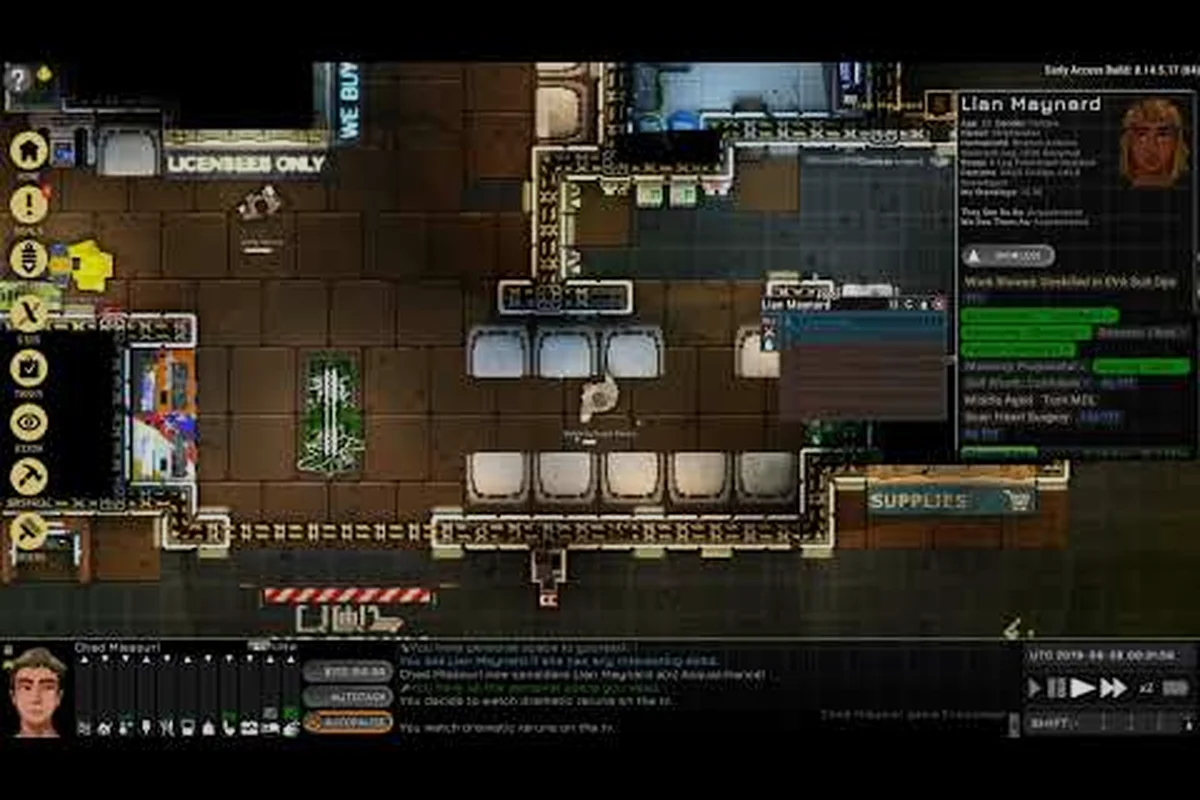
A lonely corridor on a derelict freighter tells you more about your crew's mental state than any stat screen ever will. In Ostranauts, emotional needs sit alongside hunger and fatigue as load-bearing pillars of long-term survival, and ignoring them turns salvage runs into slow-motion disasters. This guide breaks down the system that governs crew morale, stress, and personality, then shows you how to keep a ship full of fragile humans functional across dozens of in-system jumps.
How Ostranauts Emotional Needs Fit Into the Wider Crew Loop
Ostranauts treats every NPC as a fully simulated person with layered needs, and emotional needs occupy the upper half of that pyramid. Physiological needs (food, water, sleep, hygiene, toilet) keep a body alive, but emotional needs decide whether that body is willing to keep working, keep talking to you, or keep holding a wrench without dropping it into a reactor core. The two halves are tightly coupled, which is why newcomers who only monitor the Ostranauts physiological needs of their crew still find morale collapsing within a few contracts.
The official wiki separates crew needs into distinct meters and personality traits that bleed into one another. Community testing on the v1.0.0.7 patch suggests that an untreated emotional deficit can shave 15–25% off a crew member's effective skill performance, even when their physical meters sit in the green. Stress that lingers above 60% for more than a few in-game days tends to trigger arguments, missed tasks, and — at the extreme end — full psychological breaks.
The Two Halves of the Crew Needs System
Understanding the split is essential because emotional needs are intentionally more abstract than physical ones. You cannot plug a meter by handing someone a sandwich; you have to design living quarters, social rhythms, and downtime into the ship itself.
| Tier | Examples | Time to Critical | Failure Consequence |
|---|---|---|---|
| Physiological | Hunger, thirst, fatigue, hygiene | Hours to a few days | Collapse, injury, refusal to work |
| Emotional | Mood, stress, social, recreation, privacy, comfort | Days to weeks | Argument, depression, mutiny, break |
The wider Ostranauts crew needs system builds on this split, layering personality and background history on top of the raw meters so two identical bodies can react very differently to the same cramped corridor.
The Six Core Categories of Ostranauts Emotional Needs
Every crew member tracks six distinct emotional values that rise and fall based on shipboard conditions, recent events, and the company they keep. None of them move quickly, which is exactly why they slip past new captains who only glance at the meters during combat.
The categories are: Mood, Stress, Social, Recreation, Privacy, and Comfort. Each one has its own decay curve, its own recovery actions, and its own tipping point where the game begins to surface the problem through dialogue and behavior. Players who learn to read all six together generally avoid the cascading failures that end campaigns.
Quick Reference: Emotional Need Categories
| Category | What Drives It Down | What Restores It | Approx. Critical Window |
|---|---|---|---|
| Mood | Stress, isolation, insults, low pay, danger | Compliments, gifts, successful jobs, raises | 5–10 in-game days below 30 |
| Stress | Combat, cramped space, dead crew, debt pressure | Recreation, rest cycle, privacy, calm shifts | 3–7 in-game days above 70 |
| Social | Long solo shifts, ignored chat, crew death | Conversation, shared meals, group activities | 4–8 in-game days at zero contact |
| Recreation | Monotonous work, no hobbies, constant urgency | Toys, media, gambling, alcohol (cautiously) | 7–14 in-game days without use |
| Privacy | Shared bunks, no personal locker, eavesdropping | Personal quarters, door locks, quiet zones | 5–12 in-game days without space |
| Comfort | Poor air, vibration, noise, bad food, cold decks | Climate control, better food, ergonomic furniture | Continuous passive drain |
Reading that table, the takeaway is clear: emotional needs rarely crash in a single shift. They erode quietly, then surface as a sudden argument, a refusal to do a job, or a breakdown mid-repair. Veteran captains who track the trend rather than the absolute number keep their crews sane far longer than those who wait for an alert.
Mood, Stress, and the Mental State Meter
Mood and stress are the two numbers you will see most often in the crew UI, because they aggregate the other four categories and act as a quick sanity check. The other needs feed into them, but mood and stress have their own thresholds that produce visible behavior changes long before the underlying meters go critical.
Stress climbs with combat, near-misses, cramped quarters, and exposure to dangerous conditions like vacuum leaks or fires. It drops during rest cycles, recreation use, and time spent in designated quiet zones. Community testing suggests the comfortable working band sits between 20% and 55% for most personalities; pushing consistently past 70% is where you start hearing whispered arguments and watching hands shake during EVA work.
Mood is downstream of stress but is also shaped directly by events: getting paid, surviving a tough contract, receiving a compliment, or being insulted by the player. It can hold steady even under high stress for a while, then collapse once the crew member runs out of "buffer" experiences.
Mood and Stress Behavior Thresholds
| Metric | Band | Visible Effect | Player Response |
|---|---|---|---|
| Stress | 0–40% | Calm, focused | Maintain routine |
| Stress | 40–70% | Irritable, slower reactions | Schedule recreation, privacy time |
| Stress | 70–85% | Snapping at crew, missed tasks | Mandatory rest, lock them out of combat |
| Stress | 85%+ | Breakdown risk, panic attacks | Quarantine in quarters until recovered |
| Mood | 70–100% | Cheerful chatter, bonus morale events | Encourage, keep the rhythm |
| Mood | 40–70% | Neutral, working on autopilot | Watch trends, intervene early |
| Mood | 20–40% | Quiet, withdrawn, lower pay demands | Private conversation, give them space |
| Mood | below 20% | Open hostility, refusal, possible mutiny trigger | Immediate intervention or release |
A useful habit, especially early in a campaign, is to keep a written log of mood and stress swings per crew member so you can spot the personalities who spiral fastest. Two characters with identical meters can sit in completely different bands simply because one is naturally high-strung and the other is phlegmatic.
Personality, Background, and Social Compatibility
Meters explain the numbers, but personality explains why two crews with identical conditions behave so differently. Ostranauts gives each hireable a personality archetype, a background history, and a set of interpersonal affinities that determine whether they will become loyal friends or simmering enemies. This is the layer most new captains underestimate because it never shows up on a single number.
A cheerful optimist will tolerate poor food and a cramped bunk for weeks if they like their coworkers, while a paranoid loner will start demanding a private room after the second shared meal. Players report that the same onboard incident — say, a hull breach — can be brushed off by one crew and trigger a two-day breakdown in another, because the personality modulates how the meters respond to events.
Personality Archetypes and How They React to Stress
| Archetype | Stress Sensitivity | Social Need | Typical Breaking Point |
|---|---|---|---|
| Cheerful | Low | High | Sudden betrayal, friend death |
| Stoic | Medium | Medium | Slow accumulation, ignored complaints |
| Paranoid | High | Low | Loud arguments, being watched |
| Grumpy | Medium | Low | Insults, broken promises |
| Anxious | Very High | High | Isolation, surprises, vacuum exposure |
| Confident | Low | Medium | Public failure, loss of status |
Background matters too. Crew who came from law enforcement, mining, or family shipping backgrounds each carry preferred routines and pet peeves, and ignoring those for too long erodes trust. Pairing a deeply anxious character with a stoic mentor often produces a calmer ship than forcing an anxious character into a chain of EVA missions with no breaks.
For brand-new captains, the Ostranauts beginner guide walks through hiring and onboarding in a way that respects these personality hooks before you commit to a long-term contract.
Practical Strategies to Maintain High Crew Morale
Reading the meters is one half of the work; designing a ship and a daily rhythm that keeps those meters healthy is the other. The good news is that Ostranauts rewards planning over micromanagement, so a few structural choices early on will quietly sustain morale for dozens of in-game days.
The first lever is ship layout. You want at least one recreation-capable room, one quiet zone, and enough privacy partitions that introverts can retreat. The second lever is rotation: schedule EVA and combat work so that the same person is not always at risk, and make sure each crew member gets at least one short rest block per in-game week. The third lever is direct interaction: compliments, honest answers in dialogue, and fair pay all move the mood meter in ways that compound over time.
Crew Morale Action Plan
- Build dedicated recreation space first. A single lounge with seating, a media terminal, or a gaming console covers most recreation deficits and gives social needs a place to reset.
- Assign personal quarters early. Even a tiny private cabin with a door and a locker drops privacy-related stress measurably, and the Ostranauts getting started walkthrough shows how to retrofit a starter ship without losing cargo space.
- Rotate high-risk duty. Spread EVA assignments, combat stations, and salvage work across the roster so no single crew member accumulates disproportionate stress.
- Use conversation deliberately. Compliments after a successful job, honest replies to grievances, and well-timed raises push the mood meter far more efficiently than free food.
- Watch for hidden pay expectations. Crew silently compare their wages to ship productivity; underpaying a hard worker slowly drains mood without obvious feedback.
- Keep an exit option. Hiring and firing are part of the system. Releasing a chronically mismatched hire is sometimes cheaper than dragging morale down across the whole ship.
Players who treat emotional needs as part of ship engineering — alongside air pressure and power routing — rather than as an abstract "morale bar" report far fewer involuntary restarts, especially once they reach the late-game where contract difficulty climbs quickly.
Common Early-Game Mistakes to Avoid
- Ignoring mood because stress looks fine. Mood can collapse while stress stays moderate, especially after a friend's death or a pay cut.
- Stacking too many extroverts together. Two high-social personalities can keep each other happy, but two high-social personalities plus an introvert often creates constant noise complaints.
- Forgetting to give breaks after combat. A single firefight can spike stress by 15–25%; without a recovery window, that crew member will underperform the next shift.
- Treating gifts as a substitute for safety. A new toy raises recreation briefly, but it does not offset a broken air filter or a starvation diet.
Frequently Asked Questions
What are Ostranauts emotional needs, exactly?
Ostranauts emotional needs are the layered crew values — mood, stress, social, recreation, privacy, and comfort — that determine whether a hire stays productive and loyal over a long campaign. They sit on top of the physical needs system and feed into dialogue, job performance, and mutiny risk.
How fast do crew emotional needs drop in Ostranauts?
Most emotional meters decay over several in-game days rather than hours, with social and stress being the fastest movers and comfort being the slowest. Community reports suggest that ignoring social contact for a full in-game week is usually enough to push a crew member into the danger band.
Can a crew member recover from a mental breakdown?
Yes, but recovery is slow and usually requires privacy, recreation, and reduced workload for several in-game days. Repeated breakdowns leave lasting personality flags, so the safer play is prevention rather than repeated emergency response.
Do personalities really matter that much for emotional needs?
They do, because personalities modulate how every meter responds to events. The same stressful event can spike one crew member's anxiety by 10% while another barely registers it, which is why experienced captains read personalities before they read numbers.
Is it worth hiring a high-maintenance personality early on?
It depends on your ship layout and roster balance. A high-maintenance character can be a long-term asset once you have the right rooms and the right coworkers, but pairing them with mismatched hires early will drain your campaign faster than any enemy ever will.