
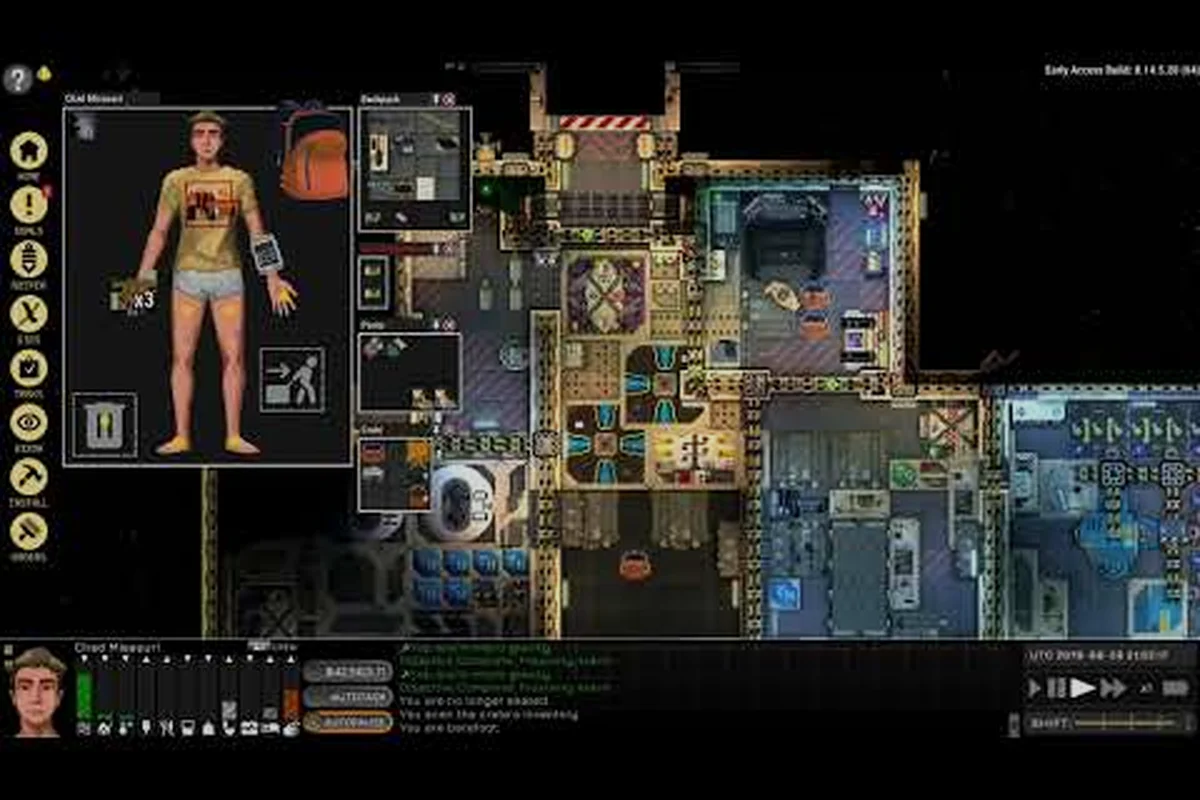
The Ostranauts Scrap Kiosk is the fastest way to convert a cargo hold full of junk into spendable credits. Every major station has one bolted to a wall near the commercial concourse, and accepting what it offers is the simplest passive income stream in the entire game. For new captains juggling fuel bills, license renewals, and crew wages, that kiosk quietly funds the early-game economy.
This Ostranauts Scrap Kiosk guide walks through the pricing logic, the highest-value items to prioritize, and the rookie mistakes that drain your profit margin. Read it once and you'll never dump a load at the wrong station again.
How the Scrap Kiosk Pricing System Works
The kiosk doesn't pay a flat rate per item—every scrap type has its own base value, and several modifiers can push that price up or down at the moment of sale. Understanding the formula is the single biggest lever for turning junk into meaningful capital, because the gap between a bad sale and a good one can exceed 40%.
Item Categories and Base Values
Every scrap item in Ostranauts falls into one of five kiosk-recognized categories. The base value reflects the kiosk's local demand for that item type on a station-by-station basis, not a universal galactic rate, which is why identical items can pay very different prices in different ports.
| Category | Example Items | Base Credit Range | Demand Behavior |
|---|---|---|---|
| Raw Materials | Scrap metal, wiring, plastic | 1–8 cr/unit | Stable, always buys |
| Salvaged Components | Circuit boards, valves, sensors | 15–80 cr/unit | Fluctuates weekly |
| Broken Hardware | Damaged consoles, cracked plating | 5–25 cr/unit | Bulk-only pricing |
| Biotic Waste | Food scraps, organics, water | 1–4 cr/unit | Station-dependent |
| Rare Salvage | Alien artifacts, intact cores | 200–2,000 cr/unit | Spotty availability |
The Raw Materials category is your steady breadwinner because the kiosk never stops buying it, even when station inventories are saturated with identical loads. By contrast, Rare Salvage offers the largest payouts but the kiosk may reject or underpay if its demand slot is full, so timing matters more than volume.
Market Fluctuations and Station Modifiers
Three modifiers stack on top of the base value of every transaction, and they apply silently if you don't know to look for them:
- Station Economy Tier — wealthier stations (corporate hubs, military depots) pay 10–20% above base for Salvaged Components because their maintenance crews consume them faster than frontier ports.
- Faction Standing — neutral or hostile factions discount your payout by up to 30% on their home stations. Always check the banner icon above the kiosk before unloading, because the penalty applies without warning.
- Time-Since-Last-Sale — the kiosk remembers what you sold recently and lowers the marginal price if you've flooded a category. Spreading your hauls across multiple station visits recovers the full rate.
Player reports from the community confirm that waiting even one cycle between bulk dumps at the same kiosk can recover 5–15% of lost margin, especially for Broken Hardware and Salvaged Components.
Station Tier Payout Comparison
The table below summarizes how each station archetype treats common kiosk categories, based on community testing across multiple save files (last verified August 2026).
| Station Type | Raw Materials | Salvaged Components | Rare Salvage |
|---|---|---|---|
| Corporate Hub | 100% | 115–120% | 110% |
| Military Depot | 105% | 110–115% | 95% |
| Frontier Outpost | 90% | 85–95% | 130% |
| Smuggler Port | 95% | 90–100% | 140% |
Corporate hubs are the best general-purpose unload point, while smuggler ports quietly offer the highest payout for Rare Salvage because their normal supply chains are disrupted. Frontier outposts, despite their cheap-looking entry fees, underpay almost everything you bring in.
Top Scrap Items to Sell at the Kiosk
Not every item in your cargo hold is kiosk gold. Some pieces are worth far more to a specialized salvager or as crafting feedstock, while others are pure kiosk bait that should never leave your hold.
High-Value Components and Their Payouts
The table below reflects community-observed payout ranges across multiple stations during normal play.
| Item | Kiosk Category | Typical Payout | Selling Priority |
|---|---|---|---|
| Intact Power Cell | Salvaged Components | 70–95 cr | High |
| Working Display Panel | Salvaged Components | 45–60 cr | High |
| Alien Polymer Sheet | Rare Salvage | 350–500 cr | High |
| Crew Quarters Module | Broken Hardware | 20–35 cr | Medium |
| Hull Plating Chunk | Raw Materials | 3–6 cr | Medium |
| Smashed Servo Motor | Broken Hardware | 8–14 cr | Low |
| Bio-Waste Container | Biotic Waste | 1–2 cr | Skip |
Items flagged High are almost always worth selling on the spot because their category demand rarely dips below the listed floor. Low priority items should be stockpiled until you have a large bulk haul, because individually they barely move your credit balance.
Common Scrap vs Rare Salvage
A common rookie move is treating all salvage the same. In practice, the kiosk's payout for a stack of Hull Plating Chunk is rarely worth the cargo space—you're better off using it as cheap repair material at a dockyard. Meanwhile, a single Alien Polymer Sheet can fund a full tank of fuel and a crew paycheck in one transaction. The rule of thumb is simple: scrap by weight, salvage by piece.
Players on the official Ostranauts Steam community guides note that derelict runs in the Boneyard and Far Water sectors are the richest sources of kiosk-eligible Salvaged Components, with average haul values 2–3x higher than core-station scavenging.
Trading Strategies to Maximize Scrap Kiosk Profits
Running the kiosk is one thing; running it well is another. These are the strategies experienced captains use to squeeze every credit out of every haul without grinding for hours.
Bulk Hauling and Inventory Management
The kiosk pays the same per unit whether you sell one item or fifty, but mass-based categories like Raw Materials and Biotic Waste quietly apply a small bulk bonus when you sell 20+ units in a single transaction. The trick is holding your haul until you're docked at a station with a high Station Economy Tier modifier.
An effective bulk workflow follows four steps:
- Stockpile Raw Materials and Biotic Waste across multiple scavenging stops until cargo space starts to hurt.
- Wait until you have at least 50 units of mixed bulk before unloading, because the bulk bonus only kicks in past that threshold.
- Visit a corporate-tier or military station for the 10–20% premium, and avoid the same kiosk you last sold at.
- Sell categories in reverse priority—Rare Salvage first while demand is fresh, then Salvaged Components, then bulk.
When to Sell vs When to Keep
The kiosk is not your only option for unloading junk. Some items fetch significantly higher prices through the License Kiosk trade pipeline or through direct NPC sales. Hold these items back from the kiosk:
- Working Display Panel — sells for 30–50% more to ship-fitting NPCs who specialize in console repairs.
- Crew Quarters Module — useful as a barter item with crew unions, who value the comfort upgrade far above the kiosk's offer.
- Any item flagged as crafting feedstock — its value compounds through the workshop bench, not the kiosk screen, especially if you have crew with the right skills assigned.
Conversely, Intact Power Cell and Alien Polymer Sheet are almost always kiosk-optimal because few NPCs stock enough capital to match the kiosk's per-unit payout at scale. The kiosk also beats direct sales on Biotic Waste, which most NPCs refuse to buy outright.
Timing Your Sales Around Demand Cycles
The kiosk's Time-Since-Last-Sale modifier is reset by other captains selling the same item, not just your own transactions. Watch the local station news feed for mentions of "scrap glut" or "component shortage"—the wording tells you which categories will pay full price this visit.
Community testing suggests the optimal cadence for kiosk visits is roughly every 4–6 in-game days at the same station. Shorter intervals trigger the discount, while longer intervals don't add meaningful bonus because the modifier caps out after about a week.
Scrap Kiosk Mistakes New Players Make
Even experienced captains leak credits at the kiosk. Watch out for these five pitfalls:
- Selling everything at the first station — the closest kiosk is rarely the highest-paying one. A 20-minute jump to a corporate hub can yield 15% more credits on the same load.
- Ignoring faction modifiers — selling at a hostile faction station can cost you a full third of your payout without any on-screen warning, and many new players never realize the discount existed.
- Flipping Rare Salvage too early — Alien Polymer Sheets and similar items appreciate in kiosk value if held for one or two in-game weeks when station demand refreshes.
- Mixing high- and low-value items — bulk transactions sometimes average down, paying less for your Salvaged Components because they're bundled with cheap Biotic Waste. Sell categories separately for clean numbers.
- Forgetting cargo space — credits earned but never banked are useless. Always check your ship's bank storage before a major dump, because overflow credits are lost when you undock.
According to community data, captains who avoid these five mistakes typically see a 25–40% increase in kiosk revenue over a standard play session. Combined with smart routing, that margin is enough to fund a second crew member within your first few in-game weeks.
Have a kiosk strategy that works for your run? Drop it in the comments below and help fellow captains squeeze more credits out of every salvage haul.
Frequently Asked Questions
Does the Scrap Kiosk reset its prices every in-game day?
No. The kiosk uses a rolling demand model, so prices only shift when station inventories move or when new arrivals flood a category. Expect subtle changes every 3–5 in-game days rather than daily resets.
Can I get flagged for selling too much scrap at once?
There is no selling limit, but the kiosk's Time-Since-Last-Sale modifier will quietly lower your payouts if you dump identical loads back-to-back. Spread out your hauls across multiple station visits for maximum return.
Is the Scrap Kiosk better than selling to NPCs?
For Raw Materials, Biotic Waste, and Rare Salvage, the kiosk is almost always faster and pays more. For Salvaged Components and unique gear, direct NPC sales occasionally outbid the kiosk by 10–20%.
Where can I find a Scrap Kiosk on every station?
Commercial concourses and maintenance decks always have at least one terminal. Larger stations may host two or three. The map overlay marks kiosk locations with a small terminal icon once you've discovered them at least once.
Does ship mass or cargo weight affect kiosk payouts?
No. The kiosk pays by item type and unit count, not by total weight. However, carrying too much scrap means less room for profitable trade cargo on return trips, so balance matters more than raw tonnage.