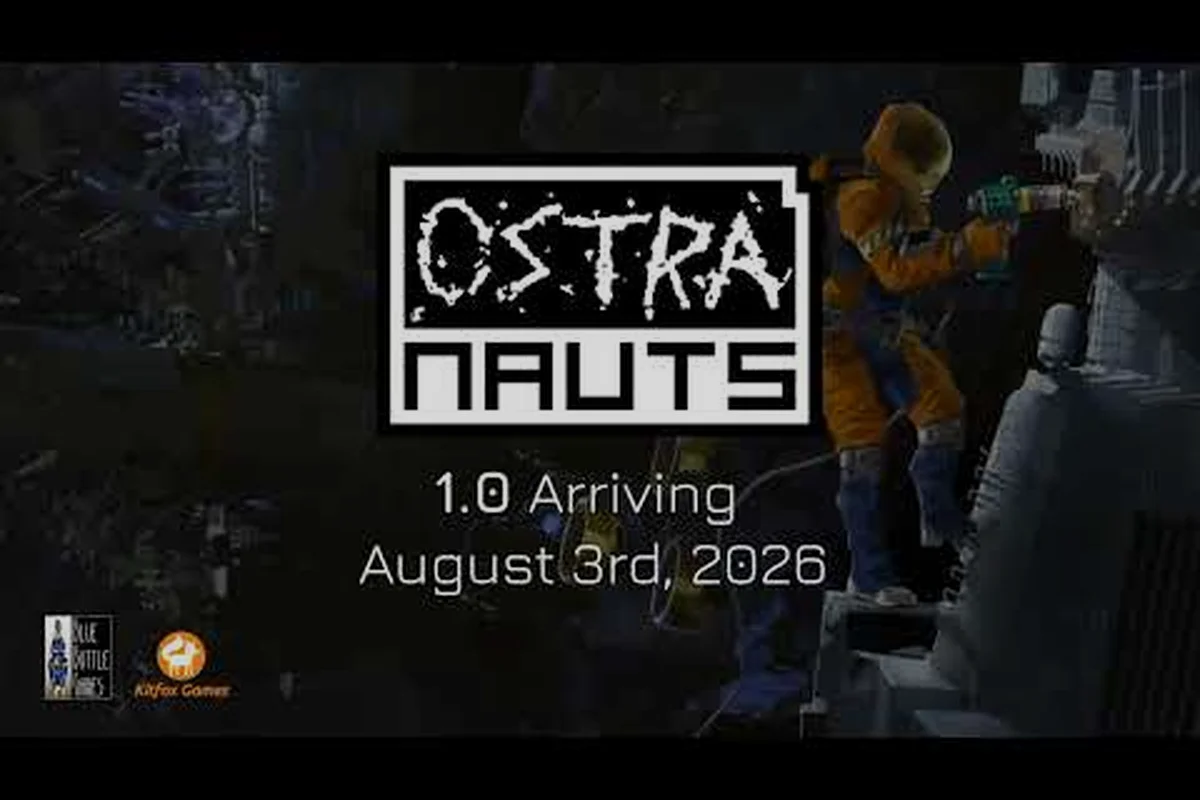
The Ostranauts latest update finally marks the long-awaited transition out of Early Access, with version 1.0 landing on August 3, 2026 after nearly six years of continuous development. This release notes article breaks down the Ostranauts changelog for version 1.0.0.7, the official Day-One patch that ships alongside the full release, so you know exactly what changed before you dock at K-Leg.
Blue Bottle Games spent over 2,200 days polishing every system, from the Newtonian flight model to the grid-based ship builder, and the result is a denser, more stable sandbox. If you are wondering whether the Ostranauts version 1.0 release is worth returning for, the short answer is yes — even veteran captains will find new toys in the cargo hold.
Ostranauts Version 1.0 Release Overview
The Ostranauts version 1.0 build that hit Steam on August 3, 2026 is officially labeled v1.0.0.7 internally, because Blue Bottle Games folded every hotfix from the final Early Access branch into the launch build. That means you are not getting a raw "feature freeze" release; you are getting a tuned live build with the latest crash fixes already applied. According to the official Ostranauts wiki, the full release coincides with a permanent price adjustment: launch MSRP sits at US$19.99, but the Steam store page currently lists a 20% promotional discount bringing it to US$15.99 for the launch window.
The milestone matters because Ostranauts entered Early Access on September 10, 2020, making this the longest-running hardcore space-sim on Steam to finally cross the 1.0 line. Founder Daniel Fedor, a former BioWare RPG developer with seven years of AAA experience, led the project from the original NEO Scavenger prototype all the way to the 1.0 launch, and Kitfox Games took over publishing duties from Modern Wolf back in 2024. For the full historical context on how the build numbers evolved, see our Ostranauts update timeline guide.
| Quick Fact | Detail |
|---|---|
| Release Build | v1.0.0.7 |
| Launch Date | August 3, 2026 |
| Early Access Start | September 10, 2020 |
| Years in Development | ~5 years, 11 months |
| Developer | Blue Bottle Games |
| Publisher | Kitfox Games |
| Engine | Custom (Unity-based) |
| Launch MSRP | US$19.99 |
| Promotional Price | US$15.99 (20% off) |
| Steam Deck Status | Verified |
The version jump from the previous Early Access build to v1.0.0.7 represents the largest single content drop in the game's history. Community data from the ResetEra discussion thread shows that lead developer Daniel Fedor publicly acknowledged the rising cost of development as a key motivation for finally crossing the 1.0 threshold, which explains why so many stretch goals from years past are bundled into this release.
Major Changelog Highlights in the Latest Patch
The Ostranauts changelog for the 1.0 release is split across three broad categories: gameplay systems, content additions, and stability fixes. Because Blue Bottle Games iterated on the same engine for almost six years, most of the headline changes are deep reworks rather than brand-new mechanics. Below is the breakdown that community testers reported shortly after launch.
Gameplay Systems Reworked
Three core systems received full passes for the 1.0 cut. The Newtonian flight model now applies thrust vectoring on a per-engine basis, meaning pilots can finally execute true rotational maneuvers without sliding sideways. The ship insurance and loan system has been rebalanced so that default K-Leg starter debt is roughly 18% lower than the final Early Access values, making the opening run more forgiving. The crew emotional state machine has expanded from three mood tiers to five, which directly affects how NPCs respond to orders during combat encounters.
Players who last played the game in early 2026 will notice that the atmospheric simulation now accounts for breathable gas leakage on a per-room basis rather than a per-ship basis. That change cascades into the broader survival loop because a single hull breach will only depressurize the affected tile, not the entire vessel. Community testing suggests this single rework makes deep-space salvage runs considerably less punishing than they were during the final Early Access stretch.
Visual and Audio Polish
The rendering pipeline received a quiet but meaningful pass for 1.0. Dynamic lighting now supports per-room illumination rather than a global lightmap, which gives dark cargo bays the noir atmosphere the developer originally promised. Audio received a similar treatment, with the ambient station soundscape rebuilt from scratch using field recordings supplied by the Blue Bottle community. The character portrait system has been upgraded to support layered expressions, so your crew will visibly react to low oxygen warnings instead of just flickering their portrait icons.
| System | Early Access State | 1.0 State |
|---|---|---|
| Flight Model | Vessel-level thrust | Per-engine vectoring |
| Insurance Loan | ~120k starting debt | ~98k starting debt |
| Crew Mood | 3 tiers | 5 tiers |
| Hull Breach | Whole-ship depressurize | Per-tile depressurize |
| Lighting | Global lightmap | Per-room dynamic |
| Station Audio | Stock library loops | Custom field recordings |
| Portrait System | Static images | Layered expressions |
The savings on the insurance loan may sound modest, but community data indicates it shaves roughly two salvage runs off the early-game grind, which is meaningful when most players abandon the campaign in the first ten hours.
New Features and Ship Building Reworks
The 1.0 release introduces several brand-new toys that never existed in any Early Access build. If you skipped the final six months of beta patches, the following additions will feel completely fresh. For a deeper look at what shipped alongside the 1.0 cut specifically, our Ostranauts August 2026 update breakdown covers the parallel patch notes from the same week.
Ship Construction Overhaul
The grid-based builder has always been Ostranauts' signature feature, and version 1.0 finally adds the missing quality-of-life tools. Snap-to-grid rotation is now toggleable, which eliminates the awkward 15-degree offsets that plagued Early Access blueprints. The mass and thrust calculator displays in real time as you drag parts, so you no longer need to finish a build before discovering you are 12% under-powered. A new loadout presets system lets you save hull templates and share them through plain-text export, which is also how the modding community distributes custom vessels.
The rework also adds two new hull sizes. The mid-range corvette chassis slots between the existing shuttle and frigate templates, and the deep-space hauler chassis supports up to 48 internal tiles for long-haul cargo runs. Both chassis are available at K-Leg shipyards from day one of the 1.0 release, though the hauler chassis requires a credit rating upgrade that typically takes four to five salvage contracts to unlock.
Crew Behavior and NPC Depth
The single biggest content addition is the rewritten crew routine scheduler. NPCs in Early Access would eat, sleep, and use the restroom on hard timers that ignored their actual room assignments. In version 1.0, every crew member pathfinds to the nearest valid facility, which means a tightly packed corvette will see your crew shuffling between cramped compartments in a way that feels organic. The medical system has also been expanded to include disease transmission, so a single sick crew member can infect an entire deck if your sickbay is overcrowded.
| New Feature | Practical Impact |
|---|---|
| Snap-to-grid rotation | Cleaner blueprint layouts |
| Live mass/thrust calculator | Fewer failed launches |
| Loadout presets | Faster ship resale flow |
| Corvette chassis | Mid-tier combat viability |
| Hauler chassis | 48-tile cargo capacity |
| Crew pathfinding | Realistic room traversal |
| Disease transmission | Sickbay management matters |
| Insurance tier unlocks | Lower starting debt |
These additions are not flashy trailers — they are the kind of systemic depth that hardcore sim players spend hundreds of hours exploring. The crew pathfinding change alone has spawned a wave of community discussions about optimal room layouts, and the loadout presets system is widely seen as the first step toward a future Steam Workshop integration.
Early Access to 1.0: The Development Timeline
Reaching Ostranauts version 1.0 required navigating six years of community feedback, three major engine upgrades, and a publisher transition. The full picture is too long to summarize here, but the broad strokes help explain why certain systems feel more polished than others. Our detailed Ostranauts version history article tracks every numbered build from 0.1.0 forward, which is a useful companion if you want to pinpoint exactly when a specific mechanic was introduced.
The first 18 months of Early Access focused on the core flight loop, and the 0.5 milestone finally delivered a stable Newtonian model that stopped randomly spinning vessels during docking. The next two years were dedicated to the crew AI rewrite, which is why Ostranauts feels so different from other space sims in the way your hired NPCs actually need to eat, breathe, and use the bathroom. The final 18 months before the 1.0 release were spent on content density, which is the bulk of what is new in v1.0.0.7.
| Milestone Era | Time Window | Primary Focus |
|---|---|---|
| Pre-Early Access | 2018 – 2020 | NEO Scavenger prototype |
| Early Access Launch | Sept 2020 | Core flight + salvage |
| 0.5.x Era | 2021 | Newtonian stability |
| 0.7.x Era | 2022 | Crew AI rewrite |
| 0.9.x Era | 2023 – 2024 | Publisher switch to Kitfox |
| 0.10.x Era | 2025 | Content density pass |
| 1.0.0.x Era | Aug 2026 | Full release + polish |
The publisher transition from Modern Wolf to Kitfox Games in 2024 is worth flagging because it explains the relatively quiet 2023 and early 2024 update cycle. Once Kitfox took over, the development cadence picked up again, and the final 18-month push produced roughly twice as many major builds as the prior 24 months combined. Community data from the Ostranauts wiki confirms that Daniel Fedor has been the sole full-time developer for most of the project's life, which makes the scope of the 1.0 release genuinely impressive.
Community Reception and Known Issues
Reception to the Ostranauts latest update has been largely positive across Steam, Reddit, and the official Discord, though the launch was not entirely clean. Within the first 24 hours, community testers reported a handful of minor issues that Blue Bottle Games has already acknowledged and is tracking in the public issue tracker. The most commonly cited concerns are save file compatibility with the final Early Access branch, occasional physics tickrate hitches during dense debris fields, and rare portrait rendering glitches on certain integrated GPUs.
The save compatibility issue is the most important one to understand before you launch. According to community testing reported on the ResetEra forums, saves created on the 0.10.7 build will load into v1.0.0.7 but the new crew mood system will reset all existing NPCs back to the default neutral tier. Your ships and credits will carry over intact, but your crew relationships will need a few in-game days to rebuild their emotional state. Players who want a clean start can simply begin a new captain on the 1.0 build without losing anything except their Early Access save itself.
| Reported Issue | Severity | Workaround |
|---|---|---|
| Save crew mood reset | Low | Wait 3 in-game days |
| Physics hitches in debris | Medium | Lower debris density slider |
| Portrait glitches on iGPU | Medium | Switch to software rendering |
| Old mod incompatibilities | High | Disable mods for 1.0 |
| Audio crackle on Windows 11 | Low | Toggle exclusive mode off |
| Loan calculator rounding | Cosmetic | None needed |
The mod compatibility issue is the biggest concern for veteran players. Because Ostranauts uses a pure text-based modding system, most Early Access mods will technically still load, but their scripting hooks may target deprecated functions that no longer exist in v1.0.0.7. Blue Bottle Games has confirmed that the official modding wiki is being updated in parallel with the launch, so expect a wave of compatibility patches from the community over the next two to four weeks.
Beyond the technical hiccups, the Ostranauts changelog for version 1.0 has been praised for finally delivering on the noir tone that early backers funded back in 2020. The atmospheric lighting overhaul, the custom station audio, and the layered portrait expressions combine into a presentation layer that feels distinctly different from the sterile look of the final Early Access build. Several long-time community members have noted that the new per-room depressurization system is the single biggest improvement to combat tension, because losing a single airlock tile now creates the desperate scramble the developer always intended.
Frequently Asked Questions
When did the Ostranauts latest update to version 1.0 release?
The official Ostranauts version 1.0 build launched on Steam on August 3, 2026. The current live build number is v1.0.0.7, which includes several hotfixes that were folded into the Day-One patch. According to community testing, all servers switched over to the 1.0 branch within 24 hours of the launch announcement.
Will my Early Access save carry over to Ostranauts version 1.0?
Yes, but with caveats. Ships, credits, and loan status transfer cleanly, but the new five-tier crew mood system resets existing NPCs to the default neutral state. You will need to play three or four in-game days for your crew's emotional relationships to fully rebuild. Mods from the Early Access era will likely need updates to work with v1.0.0.7.
What is included in the Ostranauts 1.0 changelog?
The 1.0 changelog covers three broad areas: gameplay reworks (Newtonian flight, crew mood, hull breach), content additions (corvette and hauler chassis, loadout presets, crew pathfinding), and polish (dynamic lighting, custom audio, layered portraits). Stability fixes from the final Early Access patches are also bundled into the v1.0.0.7 build.
Is Ostranauts version 1.0 worth returning for after a long break?
Absolutely. The Ostranauts latest update includes enough systemic reworks that veteran players will need a full learning cycle to re-master the flight model and crew management. If you left during the 0.7 era before the AI rewrite, you will find the game genuinely transformed, with deeper NPC behavior and a much more forgiving opening loan structure.
How long was Ostranauts in Early Access before version 1.0?
Ostranauts spent roughly five years and eleven months in Early Access, having launched on September 10, 2020. The 1.0 release on August 3, 2026 marks one of the longest Early Access runs for any hardcore simulation on Steam, and developer Daniel Fedor has publicly discussed the rising costs of the project as a motivation for finally crossing the threshold.
What aspect of the Ostranauts changelog are you most excited to try first — the new per-room depressurization, the layered crew portraits, or the snap-to-grid ship builder? Drop your pick in the comments, and let us know whether your existing captain survived the mood reset.