The Ostranauts OKLG trading kiosks at K-Leg station shape every early run. Learn which terminal handles what, how stock rotates, and where captains actually make credits without selling their own boots back to the Parts Kiosk.
Kiosk Types You'll Find on the OKLG Concourse
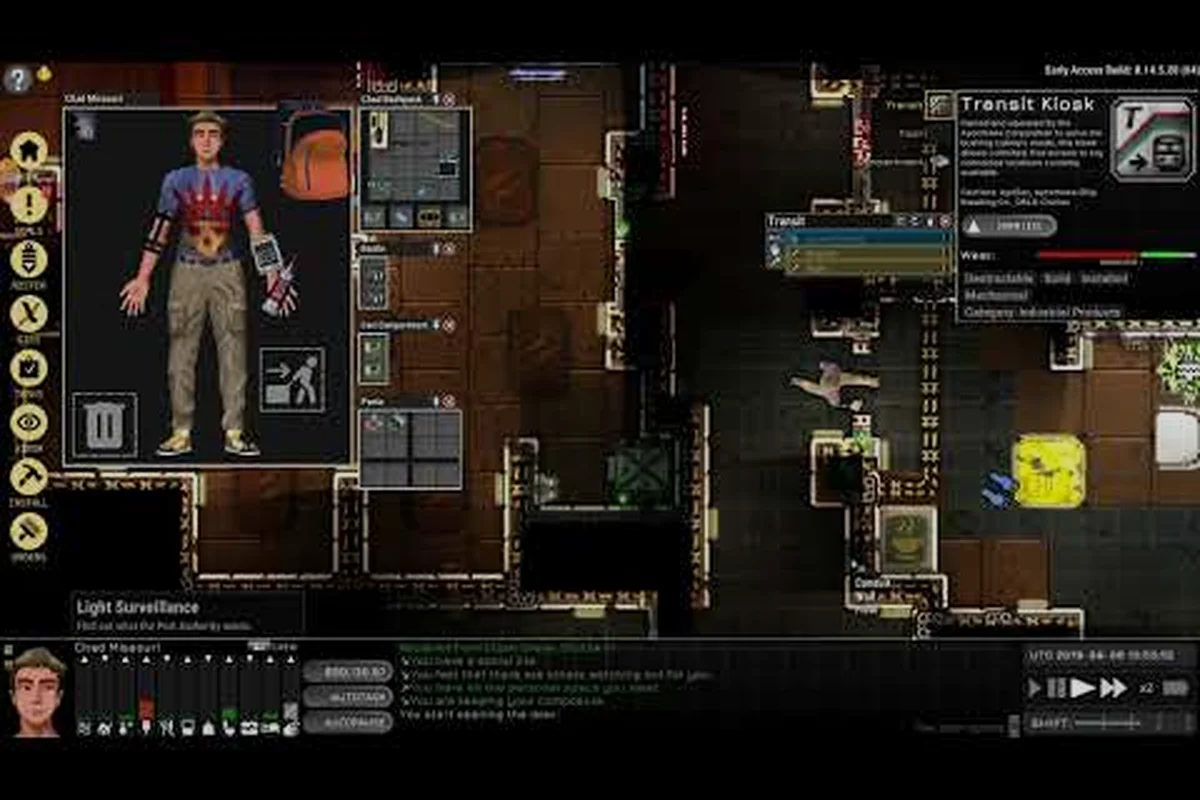
The moment your captain steps off the shuttle bay at K-Leg, the Ostranauts OKLG trading kiosks line the main thoroughfare like automatic newsstands. Each terminal owns a specific category, and walking up to the wrong one wastes both your time and your in-game day. Understanding this layout is the first thing every new player gets wrong, because the game interface does not clearly label which kiosk does what until you click through the menu and watch the inventory populate.
At the heart of the station economy, Ostranauts OKLG trading kiosks fall into five broad categories that community guides have settled on:
- Parts and Hardware Kiosk — the workhorse terminal. Sells hull patches, repair tools, replacement modules, and the consumable spares that drain your wallet on day one.
- Apparel and Personal Gear Kiosk — clothing, EVA suits, and personal effects. Pricing responds to crew morale and the active Fashion Tag preferences of your roster.
- Food and Consumables Kiosk — rations, water, medical kits, and stimulant packs. The fastest-moving inventory on the concourse because every ship needs to eat.
- Ship Marketplace Kiosk — the conspicuous starboard-side panel where starter hulls and used ships sit at eye-watering markups aimed at fresh captains.
- Black-Market Touchscreen — a hidden kiosk that only appears once your Fixer trust crosses the right threshold. Handles contraband cargo at premium prices that compensate for the risk.
Players stepping off the Ostranauts beginner guide path often assume one terminal handles everything. It does not. The Ostranauts OKLG trading kiosks are deliberately siloed, which means hunting the right one during a frantic departure eats in-game hours you cannot afford.
Why Specialization Matters
If you walk up to the Parts Kiosk looking for food, the game simply tells you to find the correct terminal. This sounds trivial, but during a loan-payment crunch where every in-game minute counts, hunting the right kiosk adds up fast. Most experienced players memorize the concourse layout within their first two visits, and that small investment of attention pays off across hundreds of future transactions.
| Kiosk | What It Sells | Best For | Worst For |
|---|---|---|---|
| Parts and Hardware | Modules, tools, hull patches | Mid-run repairs | Quick cash conversion |
| Apparel and Personal | Suits, clothing, morale gear | Crew bonding | High-margin resale |
| Food and Consumables | Rations, water, meds | Bulk buying | Luxury items |
| Ship Marketplace | Starter hulls, used ships | Long-term investment | Day-one players |
| Black-Market Touchscreen | Contraband, rare stims | Endgame crews | Low Fixer reputation |
How OKLG Kiosk Pricing Works
Pricing at the Ostranauts OKLG trading kiosks is governed by a hidden formula that combines station wealth, your Commerce skill level, and the type of item you are transacting. Community testing on the official Ostranauts wiki and Discord threads has roughed out the multipliers, though exact values shift with each patch as the developer balances the economy.
The fundamental rule holds across every category: kiosks always pay you less than they charge incoming buyers. That spread is how the station earns its operational budget, and it is the single most important number for any new captain to internalize.
The Buy-Sell Spread
When you sell an item to a kiosk, the terminal pays you roughly 30 to 50 percent of the displayed base value. When you buy the same item back, you pay 120 to 250 percent of that same base. The gap between these two numbers is the kiosk commission, and it is where most rookies hemorrhage credits without realizing it. Community-reported numbers below show the realistic range as of the current public build.
| Kiosk Category | Buy From You (Sell Rate) | Sell To You (Buy Rate) | Effective Spread |
|---|---|---|---|
| Parts and Hardware | ~40% of base | ~150% of base | ~110% loss on flip |
| Apparel and Personal | ~35% of base | ~180% of base | ~145% loss on flip |
| Food and Consumables | ~50% of base | ~120% of base | ~70% loss on flip |
| Ship Marketplace | ~30% of base | ~250% of base | ~220% loss on flip |
| Black-Market Touchscreen | Variable | Variable | Trust-gated, volatile |
The numbers come from player-reported testing, and exact values depend on your Commerce skill level and station economy modifiers. Treat them as ballpark figures rather than hard guarantees, because the developer actively tunes them between patches.
The implication is straightforward. Do not try to flip items purely within the same kiosk. Source items from outside the station economy — salvage, derelicts, and contract payouts — then sell into the kiosk when the spread works in your favor.
Daily Stock Rotation and Inventory Patterns
Every visit to OKLG reshuffles the merchandise behind the glass. The Ostranauts OKLG trading kiosks operate on a rotation tied to in-game hours, station events, and your accumulated reputation. According to community data, a full inventory refresh happens every 24 to 48 in-game hours, with smaller sub-rotations every 6 to 12 hours depending on the kiosk category.
What Restocks Frequently
Parts and Hardware sees the most predictable churn because it is tied to maintenance contracts and incoming shuttle traffic. Apparel rotates slower, and Ship Marketplace listings change only when the station updates its fleet board, typically every few in-game days.
Common items that show up on a fresh rotation:
- Standard hull patches — the bread and butter of any new captain's repair kit
- Generic EVA helmets — no stat bonuses, but they keep your crew breathing during boarding events
- Cheap nutrient packs — refill crew hunger meters at a reasonable cost without breaking the budget
- Low-power laser cutters — salvage tools with limited durability, fine for breaking into soft pods
- Used gravity compensators — the OKLG favorite for budget ship builds that still need to spin
For new captains mapping their first week at the station, the Ostranauts getting started guide covers the broader pre-flight checklist that extends well beyond the kiosk floor.
| Kiosk | Major Refresh | Minor Refresh | Items That Change Most |
|---|---|---|---|
| Parts and Hardware | 24 hours | 6 hours | All consumables, common modules |
| Apparel and Personal | 48 hours | 12 hours | Tagged clothing, EVA suits |
| Food and Consumables | 12 hours | 4 hours | Rations, water, meds |
| Ship Marketplace | 72+ hours | Rare | Used hulls only |
| Black-Market Touchscreen | Variable | Trust-gated | Contraband, stims |
What Rarely Shows Up
Do not camp the Parts Kiosk waiting for top-tier reactor cores, military-grade plating, or anti-ballistic arrays. Those items almost never appear at OKLG retail terminals. Player reports indicate that rare gear shows up primarily at derelict wrecks, salvage pods, or as high-tier mission rewards rather than at the Ostranauts OKLG trading kiosks. If you need rare components early in your run, your fastest path runs through salvage rather than kiosk shopping.
Profit Strategies at Ostranauts OKLG Trading Kiosks
The Ostranauts OKLG trading kiosks are not designed to make you rich through click-flipping. They are a price ceiling for the station economy, and profit comes from external sourcing rather than internal arbitrage. Community-tested strategies that actually generate credits include the salvage loop, bulk consumables runs, and timed bulk sales during station shortage events.
The Salvage-to-Kiosk Loop
The most reliable profit path for a new player runs through contracts rather than direct kiosk shopping. The loop tightens when you treat the kiosks as your final exit point instead of your primary income source.
- Accept a station contract that pays in salvage crates rather than raw credits
- Open the crates and identify items with low kiosk commission rates (Parts and Hardware is the friendliest category)
- Walk to the appropriate kiosk and sell before your next debt payment hits the terminal
- Use the freed-up cargo space to accept another contract and repeat
This loop matches the broader strategy outlined in our Ostranauts trading guide, which walks through economic systems that extend beyond the K-Leg concourse and into deep-space market dynamics.
| Strategy | Capital Required | Risk Level | Credit Yield per Hour |
|---|---|---|---|
| Salvage-to-Kiosk | Low | Low | Moderate |
| Bulk Consumables Buy | Medium | Medium | High during shortages |
| Direct Kiosk Flipping | High | High | Negative (avoid) |
| Contract Negotiation | Low | Variable | Steady |
| Fixer Trust Builds | Medium | High early | High long-term |
Bulk Consumables During Station Shortages
When a station event triggers a food or water shortage, kiosk sell prices spike across every consumables terminal on the concourse. Stockpiling nutrient packs ahead of a shortage event and then selling into the spike is one of the few reliable credit sources at the Ostranauts OKLG trading kiosks. The strategy requires advance preparation and a working capital buffer to buy the stock in the first place, so new players without surplus credits should skip it and stick to direct salvage runs until they have a credit reserve worth deploying.
Mistakes to Avoid at the OKLG Concourse
Most early-game credit losses at the Ostranauts OKLG trading kiosks come from a handful of recurring mistakes that veteran players have memorized. Avoiding these keeps your ship loan from spiraling into a debt spiral you cannot recover from without resetting the run.
The most damaging errors include:
- Buying items you cannot resell — luxury clothing and decorative furniture have almost no resale value at any kiosk on the concourse. Skip them unless they raise morale in a measurable way that pays back through crew performance.
- Selling at the wrong terminal — bringing ship modules to the Apparel Kiosk produces worse rates than hauling them to Parts and Hardware. Every category has a best-fit terminal.
- Ignoring the loan clock — every minute spent browsing kiosks is a minute your ship loan is accruing interest. Plan your visits, do not wander.
- Chasing rare kiosk listings — when a high-tier item appears, it is almost always cheaper to buy from a player dock or salvage it yourself than to pay the kiosk's full premium markup.
- Selling consumables you still need — selling nutrient packs to fund a ship purchase feels productive until your crew starts starving mid-jump. Always keep a buffer before you sell.
The Ostranauts OKLG trading kiosks reward focused shopping trips rather than browsing sprees. Set a target, walk directly to the right terminal, complete the transaction, and leave the concourse. That discipline alone separates profitable captains from crews that drain their loan payments into kiosk commissions.
Where will you focus your next K-Leg visit — stocking the cargo hold for a deep-space run, or hunting for that one rare module you have been chasing across three in-game days?
Frequently Asked Questions
How many trading kiosks are at OKLG station in Ostranauts?
Community testing puts the visible retail kiosks at five, but a sixth black-market terminal appears once you build enough Fixer trust. The five standard terminals handle Parts, Apparel, Food, Ship Marketplace, and a small Specialty Goods kiosk that stocks odd-lot salvage.
Do the Ostranauts OKLG trading kiosks refresh every in-game day?
The kiosks rotate their stock on an in-game clock, with major refreshes every 24 to 48 hours and minor sub-rotations every 6 to 12 hours. Player reports indicate that station events and your reputation score can trigger additional refreshes outside the standard cycle.
Can kiosk prices be exploited for infinite credits?
No clean exploit exists. Kiosk prices are tuned to adjust against your behavior, and aggressive kiosk-flipping without external sourcing triggers diminishing returns and a reputation downgrade with the station, which makes future kiosk interactions less profitable rather than more.
What should a new player buy first at OKLG trading kiosks?
Most experienced captains recommend stocking hull patches and nutrient packs before anything else. Hull patches keep your ship alive after the first scrape with a derelict, and nutrient packs prevent crew starvation penalties during longer jumps to neighboring stations.
Is the ship marketplace kiosk worth using early on?
Only if you stumble across an unbeatable deal on a used hull. The ship marketplace is the worst kiosk for resale value and the best for finding starter ships at markup, so buying there is expensive but selling there is brutal on your wallet balance.