
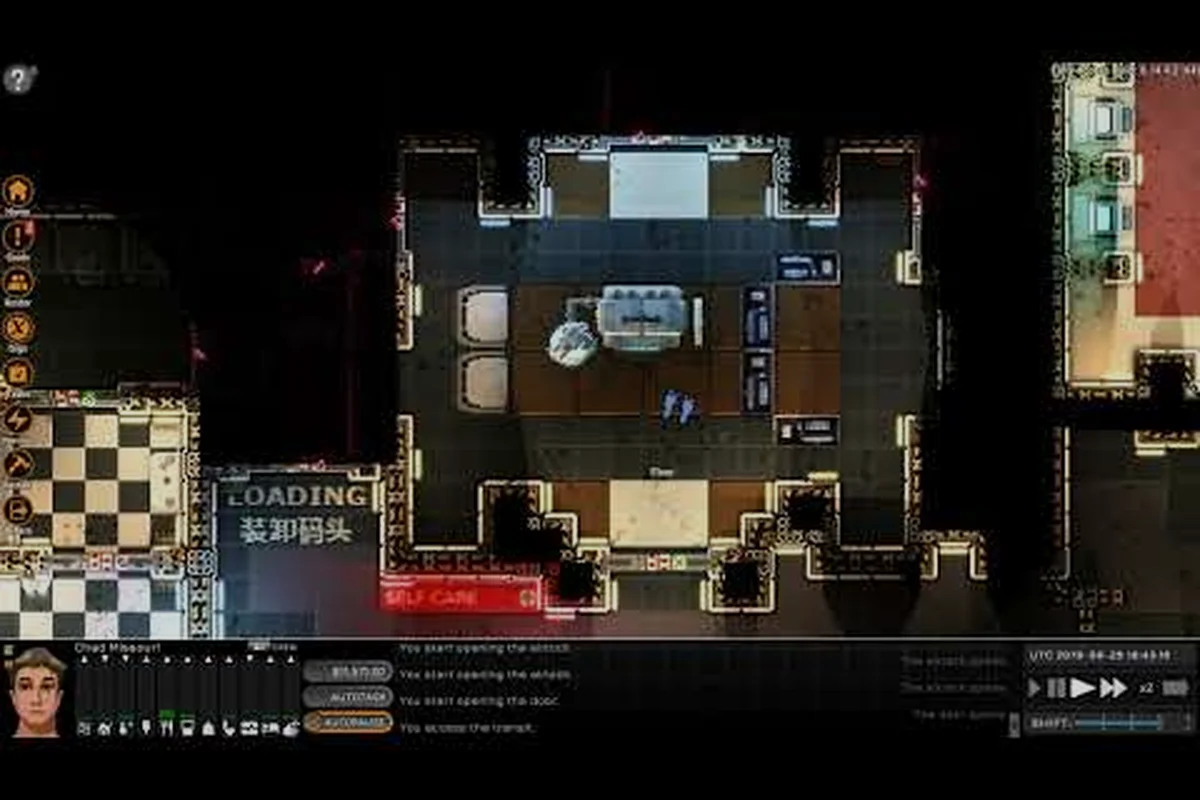
Running a profitable ship in Ostranauts comes down to converting your time, hull, and crew hours into credits that outpace your outgoing costs. This Ostranauts money making guide walks through the systems that actually move the needle: trade route selection, contract acceptance, derelict salvage economics, and the daily expense loop that can quietly sink a captain who ignores it. Skim the section that matches where your ship is right now, then come back when your station access expands.
The Ostranauts Economy at a Glance
Credits in Ostranauts move through three overlapping loops: station trade goods, contract payouts, and salvage liquidation. Trade goods are the most predictable; contracts are the most profitable per hour but riskier; salvage is the most variable and tied heavily to how well you can read a derelict's contents before cutting in. All three feed into the same wallet, and the best captains stack them rather than picking one.
According to community data shared on the Ostranauts Steam Community Guides hub, captains who mix a base trade run with one or two contract stops per cycle tend to clear roughly 30–50% more credits per in-game week than captains who only haul commodities. The reason is structural: contracts often pay bonuses that bypass station overhead, while trade goods keep cash flowing during the boring stretches between contracts.
A few economic anchors to keep in mind as you read:
- Starting credit pool is small. Expect to be in the red after your first week of fuel, food, and crew wages.
- Station economies fluctuate. A good commodity on one visit can be a loss on the next, especially after a faction event.
- Crew wages are a daily bleed. A captain with three crew on a small hauler burns more in wages than a solo skipper on a tug.
- Fuel and life support scale with distance. Long jumps are profitable only if the contract or cargo spread justifies the burn.
If you want a deeper breakdown of how hull space and outfit slots affect profit, the Ostranauts ship layout guide covers cargo sizing in detail. The short version is this: more cargo space means more trades, but it also means more crew demand, which loops back to wages.
Starting Capital Strategies for New Captains
The first 30 in-game days are survival, not growth. Every credit you spend on a non-essential upgrade during this window is a credit that cannot cover next week's fuel bill. Treat your starting capital like a runway, not a budget.
Picking Your First Ship
The starter haulers and tugs each lean into a different economic profile. The hauler gives you cargo volume at the cost of maneuverability and shield strength, while the tug is the opposite: fast and tough, but tight on hold space. Your pick should match the money making approach you actually want to run.
| Starter Hull | Strength | Weakness | Best Early Loop |
|---|---|---|---|
| Hauler | High cargo volume | Slow, fragile | Bulk commodity trade |
| Tug | Maneuverable, tougher | Small hold | Contract running |
| Salvage Skiff | Mid cargo, tools fitted | Limited range | Derelict runs |
If you are reading this as a brand-new captain, the hauler's bulk commodity trades offer the lowest-risk path to your first credit buffer. Tugs and skiffs pay better per run once you have learned station layouts and derelict salvage basics, but they punish mistakes harder during week one.
Accepting Starter Contracts
The contract board at any inhabited station offers three contract tiers: low, standard, and high payout. Low payouts are short, local, and forgiving — perfect for filling the gap between trade runs. High payouts come with timers, hostile NPCs, and occasionally a derelict mid-route. The community-reported sweet spot in early game is two low-tier contracts per cycle, with one standard-tier contract added once your crew handles itself.
When reading a contract, pay attention to three numbers: the base payout, the deadline timer, and the cargo requirement. A high base payout with a tight timer and a specific cargo type is a trap unless you already have that cargo loaded. A low base payout with a generous timer and an open cargo slot is a reliable earner.
A common rookie mistake is accepting high-tier contracts on day one to "earn fast." The math rarely works: failure penalties plus fuel costs plus the cost of the required cargo usually eat the bonus and then some. Build a buffer first, then climb.
Profitable Trade Routes and Cargo Runs
Trade routes are the bread and butter of any Ostranauts money making guide. They are predictable, repeatable, and teach you station geography by repetition. Once you have two or three reliable routes mapped, you have a financial floor under your ship.
Reading Station Commodity Boards
Every station runs a commodity board with a rotating set of goods. Prices move based on supply, faction events, and recent deliveries. The trick is not to memorize prices but to spot spread: the difference between what a station buys a good at and what the next station sells it for.
| Commodity Type | Typical Spread | Volume Per Hold | Notes |
|---|---|---|---|
| Common ore | Low | High | Stable, low-margin |
| Refined alloys | Medium | Medium | Good for short hops |
| Processed food | Medium | Medium | Station-dependent demand |
| Electronics | High | Low | Best per-ton margin |
| Medical supplies | High | Low | High demand, fragile market |
Electronics and medical supplies offer the best margins per ton, but they require hold space discipline because they compete with other high-value cargo. Common ore is the opposite: low margin, but you can fill empty slots without thinking. Most captains run a hybrid hold — electronics in the prime slots, ore filling the rest.
Margin vs. Volume Math
The single most important number in trade route planning is profit per hold ton per day. A route that pays 800 credits but takes five in-game days earns less per ton per day than a route that pays 500 credits in two days, even though the headline number looks smaller. Speed compounds.
Here is a simplified worked example for a mid-game hauler with 40 tons of cargo:
- Route A: 600 credit profit, 3 days → 5 credits per ton per day
- Route B: 900 credit profit, 5 days → 4.5 credits per ton per day
Route A wins on efficiency even though Route B looks richer. The community-reported benchmark for a sustainable trade loop is around 4–6 credits per ton per day at the hauler tier, rising to 8–10 credits per ton per day once you have unlocked faster drives and access to faction-restricted routes.
For deeper detail on how thruster upgrades and route selection interact, the Ostranauts flight guide maps the propulsion tiers worth chasing once you can afford them.
Salvage and Bounty Hunting Side Hustles
Trade routes keep your wallet steady. Salvage and bounty contracts spike it. The risk is higher, but the upside per hour is significantly better, especially in mid-game when derelicts start carrying rare components and faction bounties come with bonus payouts.
Derelict Recovery Basics
Every derelict is a sealed puzzle. Cutting in costs time and oxygen, both of which are priced into the salvage economics. The community-reported rule of thumb is to spend no more than 30% of a derelict's estimated loot value on cutting tools, oxygen, and fuel for the approach. Anything beyond that is gambling.
Inside the wreck, prioritize three categories: functional components (drives, life support, sensors), trade goods (still in sealed crates), and personal effects (faction currency items, small valuables). Functional components can be fitted to your own ship or sold to specific station buyers. Trade goods resell at the standard commodity price. Personal effects are where the real credit spikes live — a single faction-issued item can equal a full trade run.
If you want a step-by-step breakdown of cutting angles and crew positioning during a salvage op, the Ostranauts salvaging guide covers the workflow in more detail than a single section can.
Selling Findings at Newton Stations
Newton and the surrounding stations run specialized salvage buyers that pay 15–25% above the generic commodity rate for derelict components, according to community testing. The trade-off is that these buyers take time to discover and require a reputation threshold before they offer their full catalog.
| Salvage Category | Generic Buyer | Specialty Buyer | Reputation Required |
|---|---|---|---|
| Standard components | Base | +15% | None |
| Advanced components | Base | +20% | Mid tier |
| Faction-tagged gear | Base | +25% | High tier |
| Rare personal effects | Base | +30% | Max tier |
The reputation grind is real, but the payouts make it worth it once you are operating in mid- to late-game territory. A captain with maxed reputation at a specialty buyer can clear more credits from a single derelict than from two full trade cycles, which is why so many mid-game captains pivot hard into salvage as their primary loop.
Crew Costs, Wages, and Cash Flow Management
The fastest way for a profitable captain to go broke is to ignore the daily cost ledger. Crew wages, food, fuel, and station fees add up faster than most players expect, and the compounding effect over a 20-day cycle is brutal if you have not budgeted for it.
Daily Wages and Bunk Capacity
Each crew member draws a daily wage that scales with skill, faction standing, and your ship's onboard conditions. A well-paid, well-rested crew costs roughly 20–30% more per day than a minimum-wage skeleton crew, but they also complete tasks faster and survive hostile encounters at higher rates. The economics favor the upgrade once your trade volume supports it.
For an overview of crew recruitment and skill builds that match profitable loops, the Ostranauts crew guide walks through the hiring windows and skill priorities worth chasing.
Bunk capacity matters more than most captains realize. Overloading bunks is technically possible, but morale drops and the daily wage penalty stacks. Plan your hull around your crew ceiling, not your cargo ceiling.
Avoiding the Debt Spiral
The debt spiral in Ostranauts follows a predictable arc:
- Week 1: One bad run puts you slightly under on fuel or wages.
- Week 2: You take a high-risk contract to recover, which compounds the problem if it fails.
- Week 3: You are forced to sell components or take a station loan with steep interest.
- Week 4: The loan payments eat any profit, and you are functionally stuck.
The fix is mechanical, not motivational. Set a hard rule: maintain a cash buffer equal to at least 10 days of full operating costs before taking any high-risk contract. Once your buffer is healthy, you can afford one failed run without cascading into debt.
| Cost Category | Daily Burn (Small Hauler) | Daily Burn (Mid Hauler) | Notes |
|---|---|---|---|
| Crew wages | 80–120 cr | 150–220 cr | Scales with crew size |
| Food and life support | 20–35 cr | 40–60 cr | Station discounts apply |
| Fuel reserve top-up | 30–50 cr | 50–80 cr | Variable per route |
| Station fees and fines | 0–20 cr | 0–40 cr | Avoid fines for max savings |
These numbers are community-reported and may shift with patches, but the ratio between categories is stable. Crew wages are always the largest line item, which is why solo or duo operation is the most capital-efficient setup in early game even though it limits your contract options.
Frequently Asked Questions
What is the fastest way to make credits in Ostranauts early on?
Run short-hop commodity trades between two close stations with high spread on electronics or medical supplies. The route takes two in-game days and requires no crew, so your only cost is fuel. This Ostranauts money making guide treats it as the baseline loop before adding contracts or salvage on top.
Should I hire crew right away or run solo?
Run solo until your trade loop is stable and your buffer covers ten days of expenses. Then hire one crew member at a time, testing whether each hire improves your profit per day. Hiring all at once is the most common cause of the early debt spiral.
Are derelicts worth the risk for a new captain?
Not in week one. Once you have a stable trade route, a buffer, and basic cutting tools, derelicts become a high-reward side hustle. Until then, the oxygen and tool costs will eat most of your loot.
Do bounties pay better than trade routes?
Yes, but they also carry the highest variance. A bounty contract can pay three to four times a standard trade run, or it can fail and dock you with repair bills. Mix bounties into a steady trade loop rather than running them exclusively.
How does reputation affect earnings?
Reputation gates access to specialty buyers and faction-specific contracts. Both pay above market rate, so a captain with high reputation at two or three factions will out-earn a captain with no reputation at the same tier, even with identical ships and crew.